The Fruits of Provision
Watercolour
16 X 12 X 1.5 inch
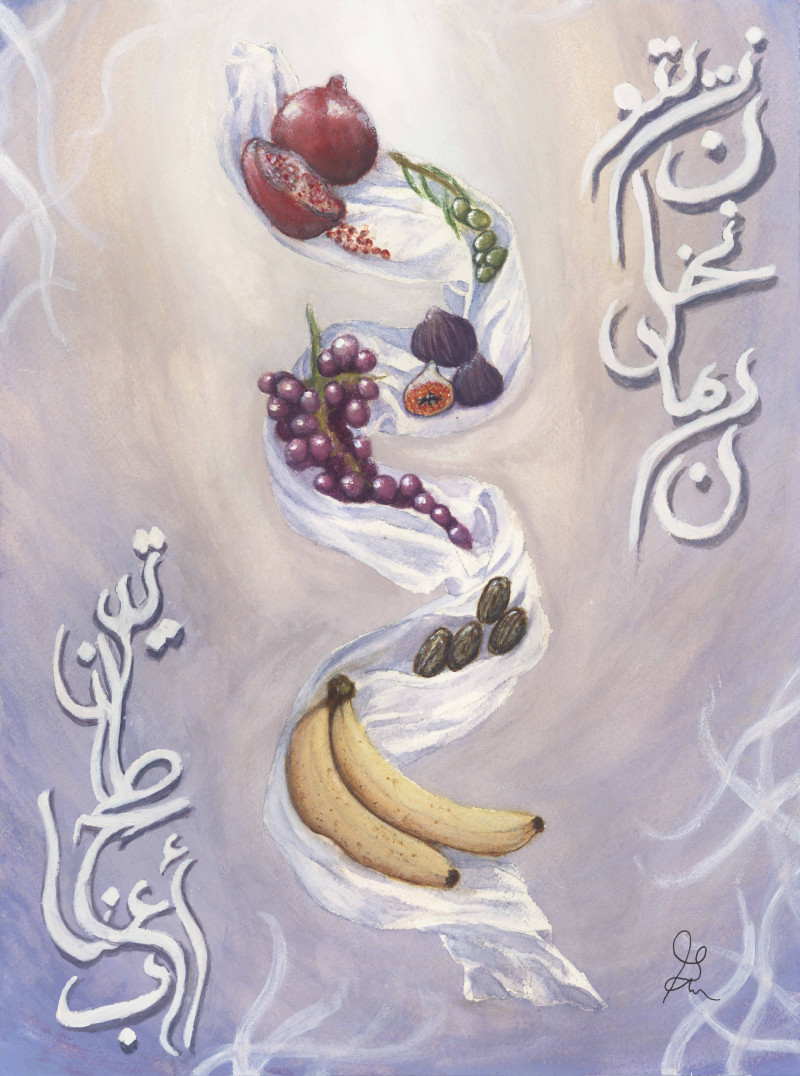
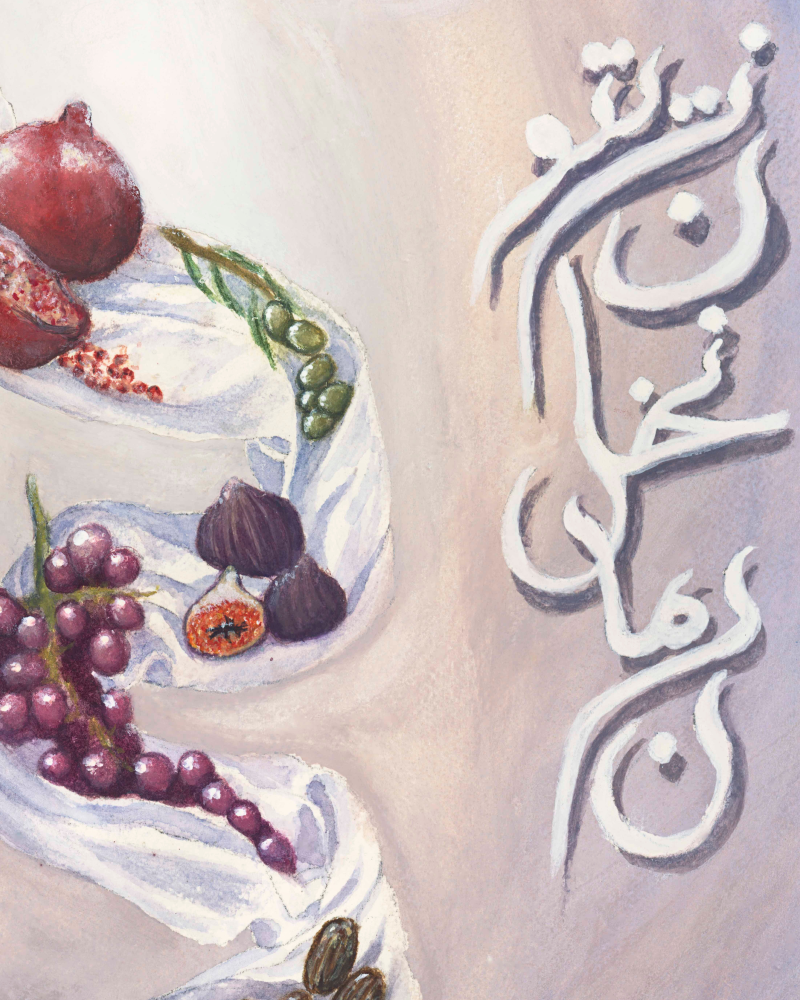
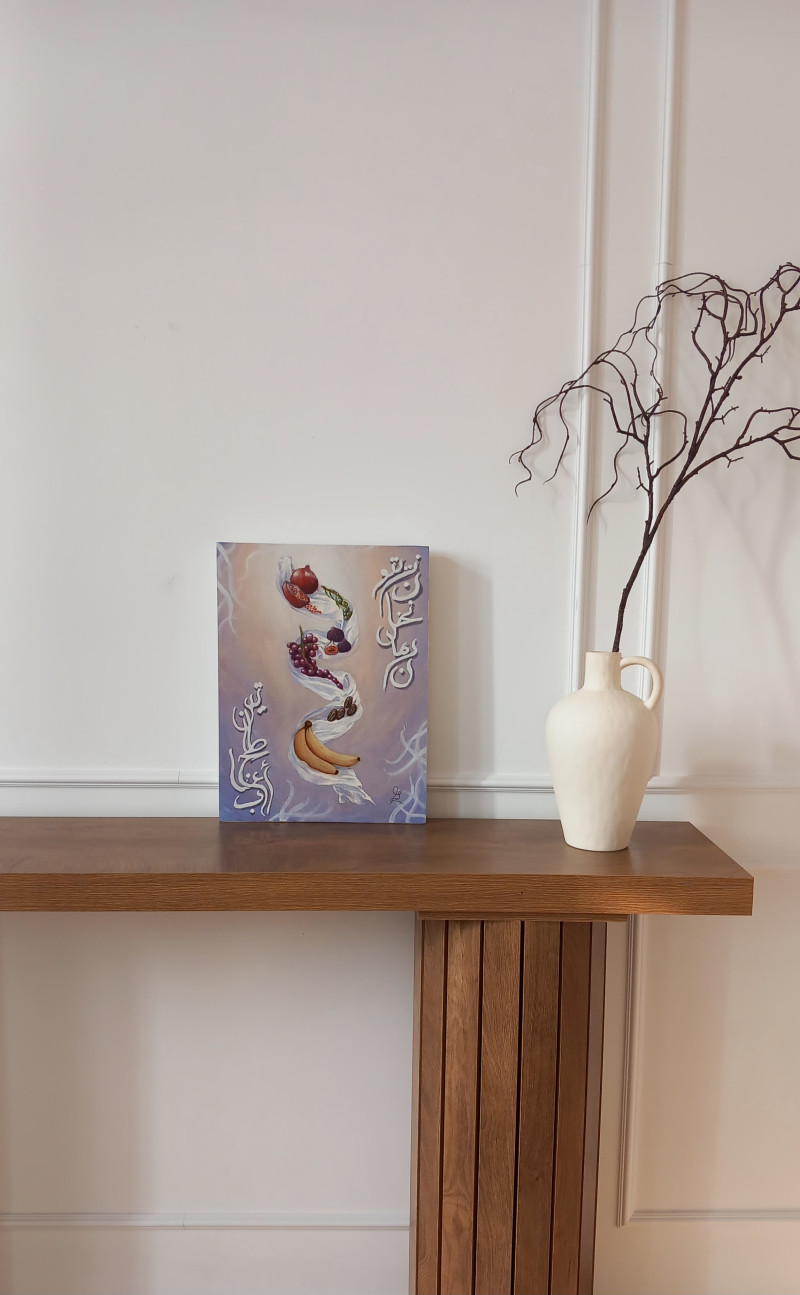
In The Fruits of Provision, the artist works in watercolour to depict fruits referenced in the Quran, including the pomegranate, date, olive, fig, grape, and banana. Rather than functioning as a traditional still life, the painting presents these familiar foods as points of entry into Quranic narratives, where each fruit appears across different stories as a sign of divine wisdom, mercy, and provision. Through a restrained use of light, softness, and composition, the work aims to evoke awe and quiet amazement, inviting viewers to reconsider the spiritual significance embedded within what is often perceived as ordinary.
In this painting, she depicts fruits mentioned in the Qur’an alongside a draped cloth referencing the table spread from heaven in the story of Jesus in Islam. Through restrained composition and soft watercolour, the work connects sustenance to divine mercy, offering a renewed perspective on ordinary life and provision.
Price:
Price on request
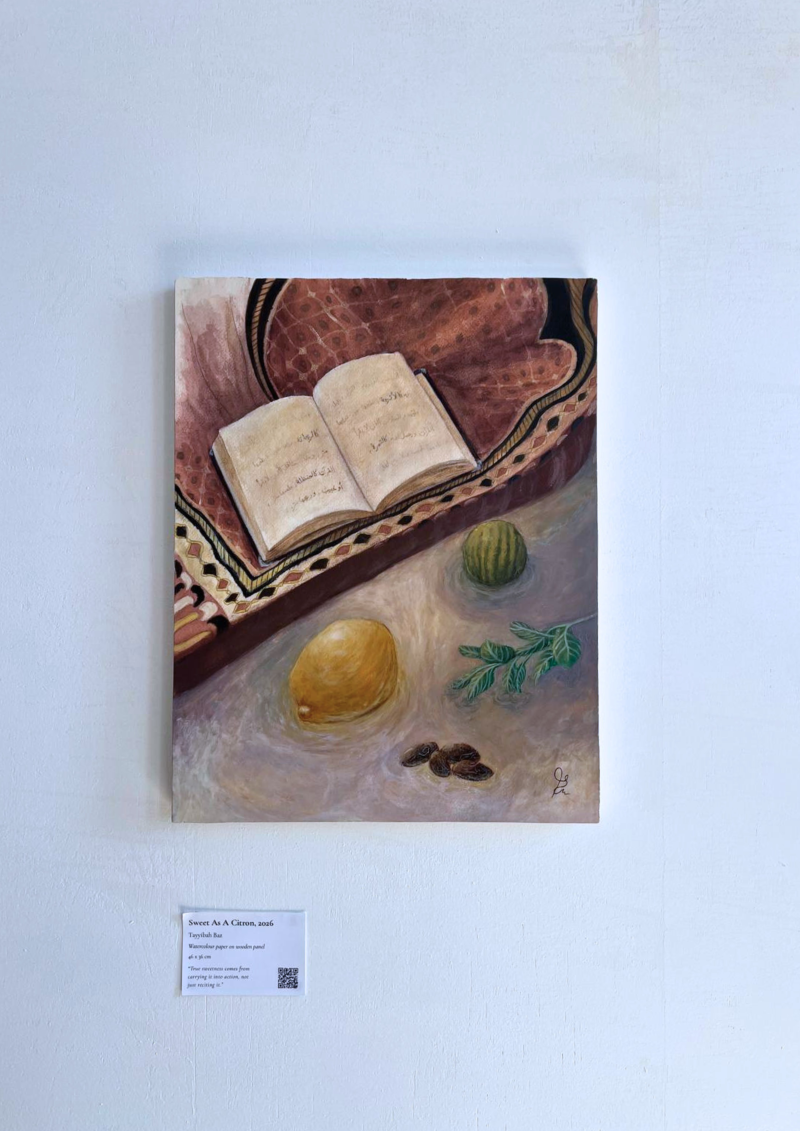
Sweet As A Citron
Watercolour
18 X 14 X 1 inch
Sunan an-Nasa'i 5038 Abu Musa Al-Ash'ari said:
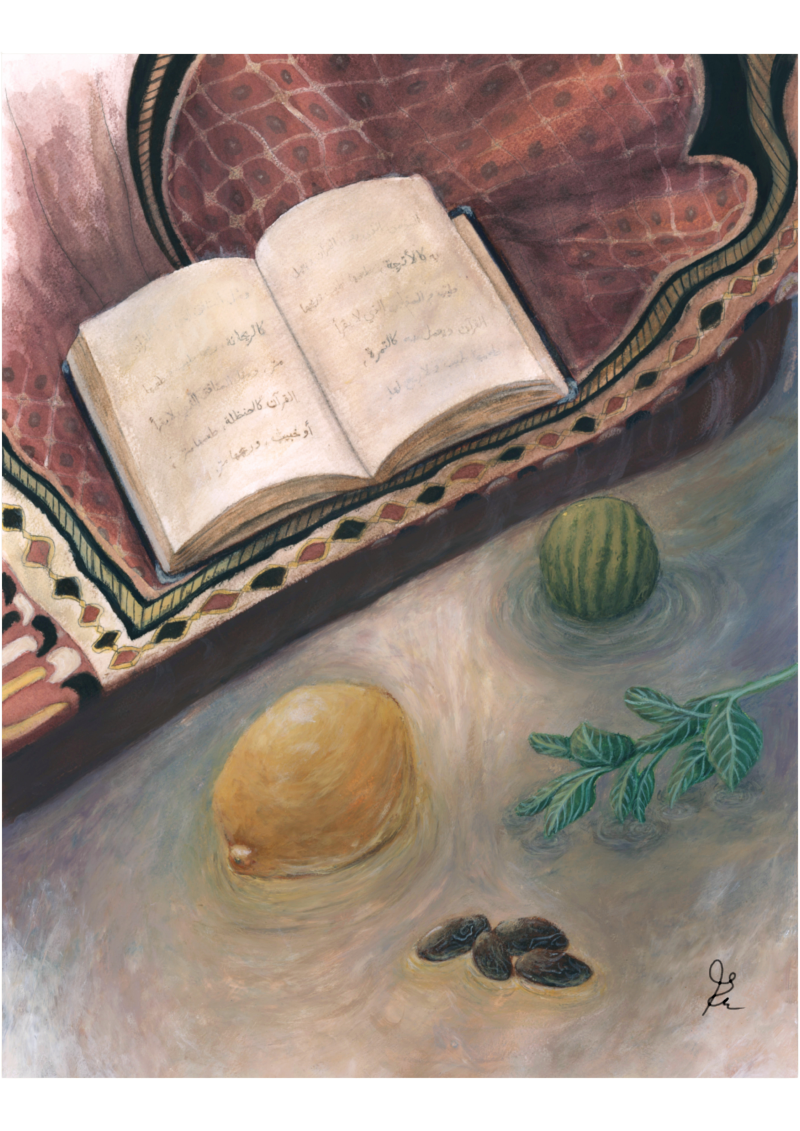
"The Prophet [SAW] said: 'The parable of the believer who recites the Qur'an is that of a citron, the taste and smell of which are good. The parable of a believer who does not read the Qur'an is that of a date, the taste of which is good but it has no smell. The parable of a hypocrite who reads the Qur'an is that of basil, the smell of which is good but its taste is bitter. And the parable of a hypocrite who does not read the Qur'an is that of a colocynth (bitter-apple), the taste of which is bitter and it has no smell."
أُتْرُجَّةِ التَّمْرَةِ الرَّيْحَانَةِ الْحَنْظَلَةِ
Sweet as a citron is the second painting in its 'Fruit Series' which pertains to the use of analogies to describe characteristics and qualities of believers with fruits. This particular hadith consists of 3 fruits and one plant: The citron, the date, sweet basil, and a colocynth. The Prophet Muhammad (May Allah send His Peace and Blessings upon him) mentioned these due to their smell and taste to describe a believer that recites and acts upon the Quran to be sweet in both taste and smell just like a citron. A believer that does not recite the Quran but acts upon it has no smell but still tastes sweet as a date. Sweet basil used to describe a hypocrite who recites the Quran but doesn't act upon it as sweet smelling, but essentially bitter in taste. And the last is a hypocrite who neither recites nor acts upon it, they are like a colocynth, which is described as a poisonous fruit for its potential to harm a human. Its smell and taste is bitter and nothing about it is at all pleasant.
Ultimately, one thing that you will learn from this hadith is that the Quran in essence, is a form of protection that must carry itself in action. No matter how much one recites it, if they fail to understand it and use it as guidance in their life, then they will only benefit from the external praises and none internal. It reflects my own journey with the Quran. That we tend to struggle and feel we're not able to strive for higher. Because of that flaw, we fail to realise that externally and internally it affects us in our faith and causes more weakness than strength. Without the Quran, how can we wish to be as sweet and truly be cleansed and cleaned inside and out to smell just like a Citron?
Price:
GBP 450

 Subscribe
 EN
EN
 ES
ES
 FR
FR
 DE
DE